



How to Reduce Material Handling Costs: 7 Practical Strategies
Operations managers know excessive material handling costs can prey on their margins. Yet, material handling is one of the most neglected cost factors on most job sites and projects.
Whether you are working on a construction project, a quarry, or logistics hubs, high handling costs can quietly erode your margins if you leave them unchecked.
Selecting the right heavy equipment and material handling equipment and using it efficiently can make all the difference. From backhoe loaders moving construction aggregates between sites to telehandlers stacking heavy loads at height, every machine in your fleet either saves you money or costs you more than it should.
Below, we have provided 7 key strategies that give you a clear and practical roadmap to reduce material handling costs without affecting your workflow.
1. Right-Size Your Fleet For Specific Operations
Using oversized and undersized equipment is often the first mistake most project managers and contractors make on a job site. Deploying oversized equipment for light tasks wastes fuel, increases wear and increases operating costs. Audit your fleet regularly and match every piece of equipment to the job requirement. A mid-size backhoe loader is often more cost-effective than a full-size excavator for light trenching and loading tasks.
2. Stay On Top Of Preventive Maintenance
Sudden downtime and unplanned repairs always cost more than scheduled maintenance. A machine that breaks down in the middle of a shift not only costs you a hefty bill, but also sits idle, and delays your project. Adhering to a strict preventive maintenance calendar keeps your material handling in good condition. Check the fluids, replace filters and inspect the hydraulic system. Consistent maintenance extends your machine’s lifespan and keeps handling costs predictable.
3. Optimise Site Location To Reduce Travel Distance
Let’s be real, heavy equipment, whether you use backhoes or cranes, all consume high quantities of diesel. Fuel costs often demand a major portion of operational and material handling costs, and keeping them in check can be fruitful for your business. Every unnecessary metre your machine travels leads to unwanted fuel consumption and component wear.
Before a project begins, map your material work and position storage points, loading areas and processing points as close as you can. On construction and quarrying sites, reducing travel distance for backhoes and telehandlers can result in significant fuel cost savings. A well-planned site location can reduce machine utilisation, which in turn can reduce overall handling costs.
4. Train Operators To Work Efficiently
Operator behaviour directly impacts fuel consumption, equipment wear and cycle times. Operators with poor habits and inefficient operation techniques lead to high material handling costs. Habits like over-revving engines, incorrect gear usage and rough braking increase component wear.
Always employ trained operators and invest in proper operator training, which covers modern handling techniques, travel path optimisation and machine-specific best practices. An efficient operator can finish a job earlier than an untrained one, reducing overall handling costs.
5. Leverage Telematics & Fleet Data
Telematics are no longer just a fancy feature in your material handling equipment. This feature provides you with real-time visibility on how your machine is being used across the entire fleet and on a job site. Telematics lets you monitor fuel consumption, idle time, operator behaviour, maintenance dashboard and various other factors on a single dashboard.
For fleets using telehandlers, cranes and excavators simultaneously, this data helps you spot underperforming machines and inefficiencies before they transform into expensive problems.
6. Take Advantage Of Multipurpose Equipment & Attachments
There are various multipurpose heavy equipment on offer, both in the used and new equipment markets. Multipurpose machines like backhoe loaders and telehandlers serve as the most-effective option when it comes to versatility. Both machines are compatible with a wide range of attachments like forks, grapples, larger buckets, etc., which allows you to handle various types of materials and get the best ROI from the machine. This reduces the reliance on specialised equipment, which costs more whether you buy or rent.
7. Avoid Unwanted Idle Time
Idling is one of the most common causes of fuel wastage and inflated material handling costs. The good news is that it can be easily prevented. An engine left running during shift changes, breaks, and waiting periods accumulates unwanted hours, consumes fuel and increases engine wear.
Incorporate strict anti-idling policies in your fleet and use telematics to identify machines exceeding idle thresholds. Lowering idle time by at least 20% can bring noticeable results in your material handling projects.
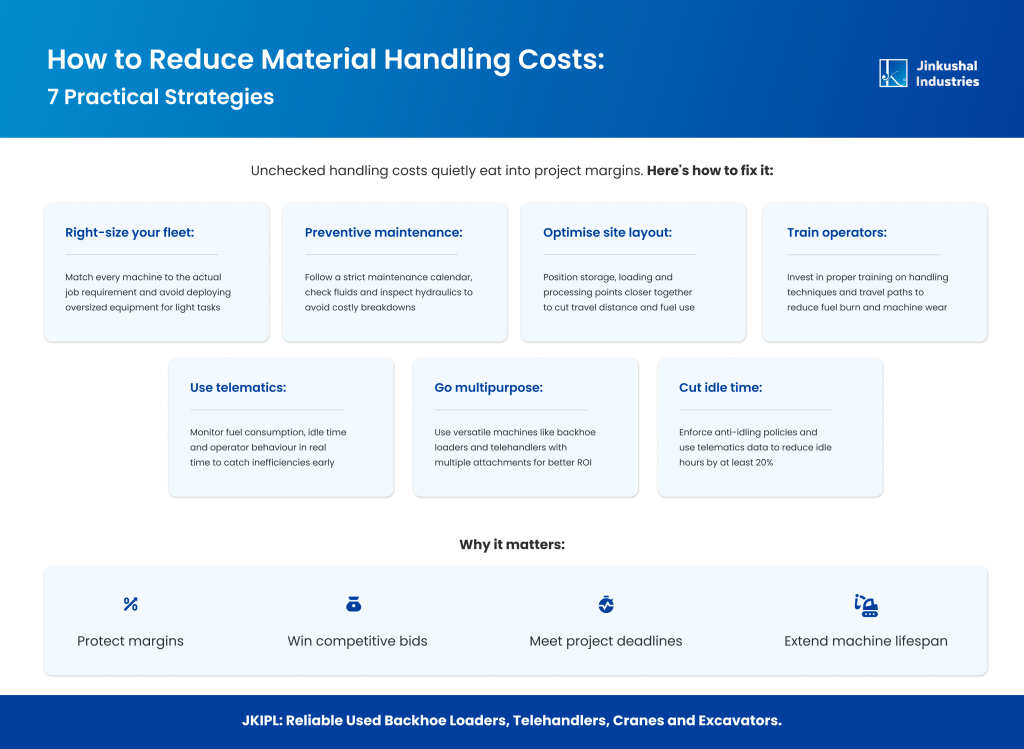
Why Is It Important To Reduce Material Handling Costs?
- Protect Margins: Lowering operating costs directly increases overall project profitability.
- Better Machine Lifespan: Using machinery only when needed reduces unwanted usage and reduces wear, which increases the lifespan.
- Better Bidding: Leaner operations allow you to submit competitive bids for contracts.
- Better Workflow: Efficient material handling technique helps you enhance overall workflow and allows the crew to handle higher output each shift.
- Timeline Compliance: Fewer breakdowns and faster material movement help you keep your projects on track and complete them within the timeline.
Final Takeaway
Reducing handling costs isn’t about cutting corners on a project; it’s about working smarter with the equipment in your inventory and making better decisions. The strategies provided above are practical, proven and applicable whether you’re working on a small short-term project or an extended long-term project.
Start auditing your fleet, use multipurpose equipment and leverage telematics data to reduce material handling costs. The savings you make can be used for business development and future projects.
These practices are more effective when you choose quality heavy equipment. Are you looking for reliable and cost-effective material handling equipment? JKIPL is India’s leading dealer of used heavy equipment, offering material handling machines like backhoe loaders, excavators, telehandlers, cranes, wheel loaders, and dump trucks. Contact us today to learn more.

