


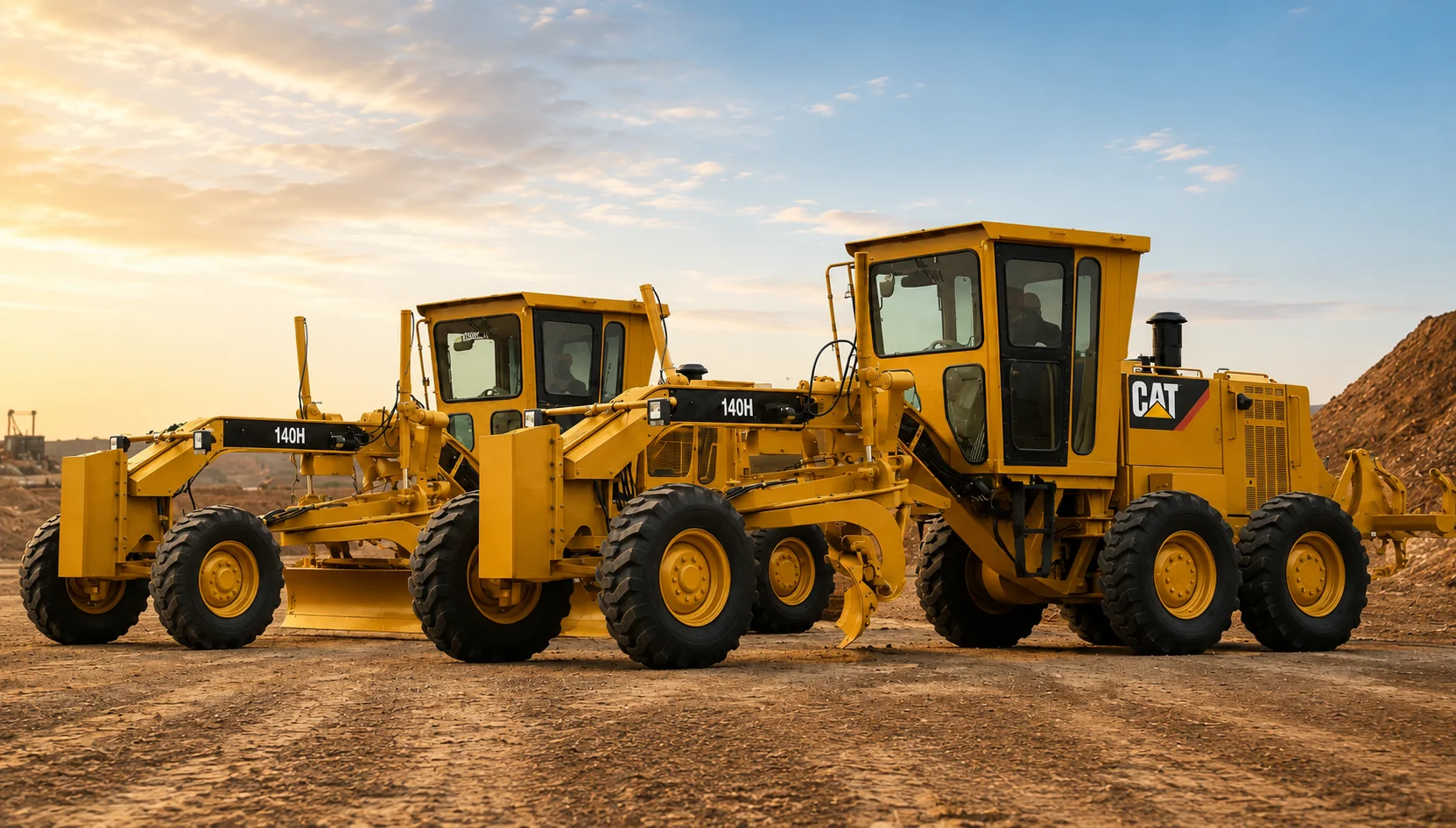
Motor Graders: What They’re Used For and How to Buy the Right One
In the infrastructure & construction sector worldwide, levelling surfaces with high precision is the key to long-lasting projects. This is where motor graders make a grand presence. Before paving a road or laying a foundation, contractors seek machines that help in creating a perfectly flat surface. Many fleet owners & contractors, however, struggle to fully understand the important motor grader uses because these machines look highly specialised.
Deciding between buying brand-new models & looking for used motor graders for sale adds another complexity before buying. If you are a project manager or fleet owner, the first thing you need is a clear breakdown. This guide, therefore, explains what this equipment does & how to confidently select the right machine for your upcoming municipal or land development projects.
Quick answer: a motor grader, also called a grader machine, motorized grader or construction grader, is a heavy machine with a long adjustable blade that levels and smooths ground for roads and building sites. Read on for its uses, the types of grader machine, popular CAT motor grader models and a buying checklist.
What Are Motor Graders & What Are They Used For?
Motor graders are heavy equipment machines engineered primarily for grading rough & uneven surfaces. This machine features a long, adjustable blade, known as a moldboard, located between the front & rear axles.
While they look very similar to bulldozers, which push massive amounts of dirt, motor graders refine the surface to exact requirements. Common motor grader uses include creating smooth surfaces for paved roads, maintaining gravel routes, & levelling large construction sites. This machine also helps in creating gravel roads, clear light snow & prepare sites for excavators & loaders to perform their work.
Operators use the blade to cut, spread, & mix materials, which helps site & project managers evaluate if your project needs a standard model or a heavy-duty machine like a CAT motor grader for tough terrains.
What Is a Motor Grader Used For? Uses at a Glance
- Road building: final grading of the base before asphalt is laid.
- Gravel road upkeep: redistributing loose material and removing ruts.
- Site levelling: bringing large construction and land development sites to grade.
- Site preparation: leaving a flat surface for excavators and loaders to work on.
- Snow clearing: pushing light snow off roads, especially with special-purpose graders.
Types Of Motor Graders You Should Know
Here are the main types of grader machine you will come across:
Articulated‑frame motor graders
Articulated‑frame graders are designed with a central hinge that allows the front & rear sections to shift relative to each other. Their unique design improves the turning radius, which makes them ideal for winding rural roads, uneven terrain, & project sites with space restrictions. Articulated graders deliver better blade control on curves & tight corners, which is essential for maintaining smooth, accurate grades on irregular alignments on sites in emerging markets.
Rigid‑frame motor graders
Rigid‑frame graders come with a single, straight frame with conventional front & rear axles. This provides them with superb stability on long, straight‑line grading operations. They assist in delivering highly consistent finishes on highways, airport runways, & large‑scale grading projects where precision & productivity matter more than tight manoeuvrability. The rigid structure also helps them continuously work on heavy‑duty operations at sites with well‑prepared & graded surfaces.
Mini motor graders
Mini or compact motor graders are much smaller, lighter machines. They come with shorter wheelbases & lower horsepower ratings, yet they still offer proportional blade reach. Mini graders fit easily in narrow streets, urban areas, & small land‑development sites where full‑size graders will struggle. Their lower grader machine price & transport cost also make them highly practical for municipal contractors & small developers who need frequent grading without large equipment.
High‑horsepower motor graders
High‑horsepower graders often slot above the mid range because of their size, capabilities & weight. They feature powerful engines, longer blades, & highly durable drivetrains designed for heavy‑duty grading & tough material conditions. These machines shine on long‑haul roads, large infrastructure sites, & projects with hard‑packed or rocky surfaces where productivity & uptime are essential.
Though they carry a higher grader machine price, their ability to work faster & showcase extreme productivity in challenging tasks justifies the investment made by large contractors.
Special‑purpose graders
Special‑purpose motor graders are customised for niche motor grader uses like snow removal, mining, or heavy scarifying. They are frequently fitted with attachments like V‑ploughs, wing blades, & rear rippers for better work precision & versatility. These machines offer higher efficiency in specific environments where standard graders will fall short.
For regional contractors dealing with seasonal snow, heavy‑dirt mining push areas, or drainage‑intensive work, special graders offer the muscle & capabilities you need.
|
Type |
Engine Power |
Blade Length |
Operating Weight |
Transmission |
Best For |
|
Articulated-Frame |
120-180 hp |
3.7-4.3m |
12-14 tons |
Powershift and hydrostatic |
Winding rural roads, tight sites, terrain |
|
Rigid-Frame |
140-200 hp |
3.7-4.9m |
14-20 tons |
Powershift |
Highways, runways, long straight grading |
|
Mini/Compact |
80-130 hp |
2.4-3.0m |
5-9 tons |
Powershift and hydrostatic |
Municipal roads, small sites |
|
High-Horsepower |
200-275 hp |
3.7-4.3m, larger on some models |
18-28 tons |
Powershift |
Large infrastructure roads, quarries, and mines |
|
Special Purpose |
140-250 hp |
Variable |
14-25 tons |
Powershift + hydraulic circuits |
Snow removal, mining, heavy scarifying |
Popular CAT Motor Graders
Caterpillar motor graders are a common choice for road and site work. Two models buyers often ask about are the Caterpillar 120 motor grader and the CAT 140H motor grader. Stock changes, so check the motor graders category for the units available now, or contact JKIPL and tell us the model and year you need.
How To Buy The Right Motor Grader?
- Know your main motor grader uses first: Check whether you mostly require grading rural roads, preparing large sites, or maintaining municipal surfaces. Different grader uses need different frame types, blade lengths, & horsepower ranges.
- Match power and size to your applications: Mid‑size articulated motor graders match most road‑contracting & land‑development projects. High‑horsepower models like a CAT grader are profitable only if you frequently work on large projects or long‑haul roads. Popular CAT choices include the Caterpillar 120 motor grader and the CAT 140H motor grader.
- Consider grader machine price vs long‑term value: A cheaper machine price today can lead to higher maintenance costs later. If you’re selecting a model from used motor graders for sale, don’t cut corners by purchasing cheap machines. Select well-maintained used CAT motor grader models or machines from leading brands. Compare new versus used motor graders, & calculate lifetime cost (fuel, parts, downtime) before settling.
- Check attachments and versatility: Look for models that fit with a front blade, scarifier, ripper, V‑plough, or snow attachment. A versatile motor grader can work on multiple operations, which minimises the need for extra machines & saves capital.
- Evaluate operator comfort and safety: Cab layout, visibility, & control layout matter as much when operators spend hours on rough roads. A spacious, comfortable, & well‑designed interior reduces fatigue and improves grading accuracy on every project.
- Check service network & spare part availability: In emerging markets, spare‑part availability & dealer support are equally critical as performance. Buy from brands and dealers with a strong presence near your project areas, even if the grader machine price is a little higher.
- Plan for financing & resale: If a full‑out purchase affects your budget, consider options like leasing or financing. Choose popular models, including reliable CAT grader models or commonly used motor graders for sale, which often hold better resale value over time.
Used Motor Grader: What to Check Before You Buy
- Service records and working hours: ask for proof of regular maintenance and the hours shown on the gauge.
- Blade (moldboard) and cutting edges: look for heavy wear, cracks or bends.
- Hydraulics: check hoses, cylinders and joints for leaks and test that blade movements are smooth.
- Engine and transmission: look for leaks and unusual noises, and check how the machine shifts.
- Frame and axles: on articulated models, check the hinge for play.
- Documents: buy from a verified dealer who provides the paperwork for the machine.
Final Thoughts
Selecting the right motor grader isn’t about buying the biggest & flashiest equipment, but purchasing the machine that best aligns with your real motor grader uses & requirements. Whether you get a new or used CAT motor grader, focus on long–term productivity, after-sales support, compatibility with attachments & ROI.
If you want to buy reliable used motor grader models & refurbished grader machines, visit Jinkushal Industries (JKIPL) & get the best grader machine price. Contact us today.
Motor Grader FAQs
What is a motor grader and what is it used for?
A motor grader levels and smooths ground using a long adjustable blade. It is used for finishing road bases, maintaining gravel roads, levelling sites and clearing light snow.
What are the types of grader machine?
The main types are articulated-frame, rigid-frame, mini (compact), high-horsepower and special-purpose motor graders.
Is a used CAT motor grader worth buying?
It can be, if it has service records, reasonable working hours and no major wear on the blade, hydraulics or frame. Buying from a dealer who inspects and refurbishes machines lowers the risk.
What decides the price of a grader machine?
Model, age, working hours, condition and attachments. Contact JKIPL with the model you need for a quote.

