


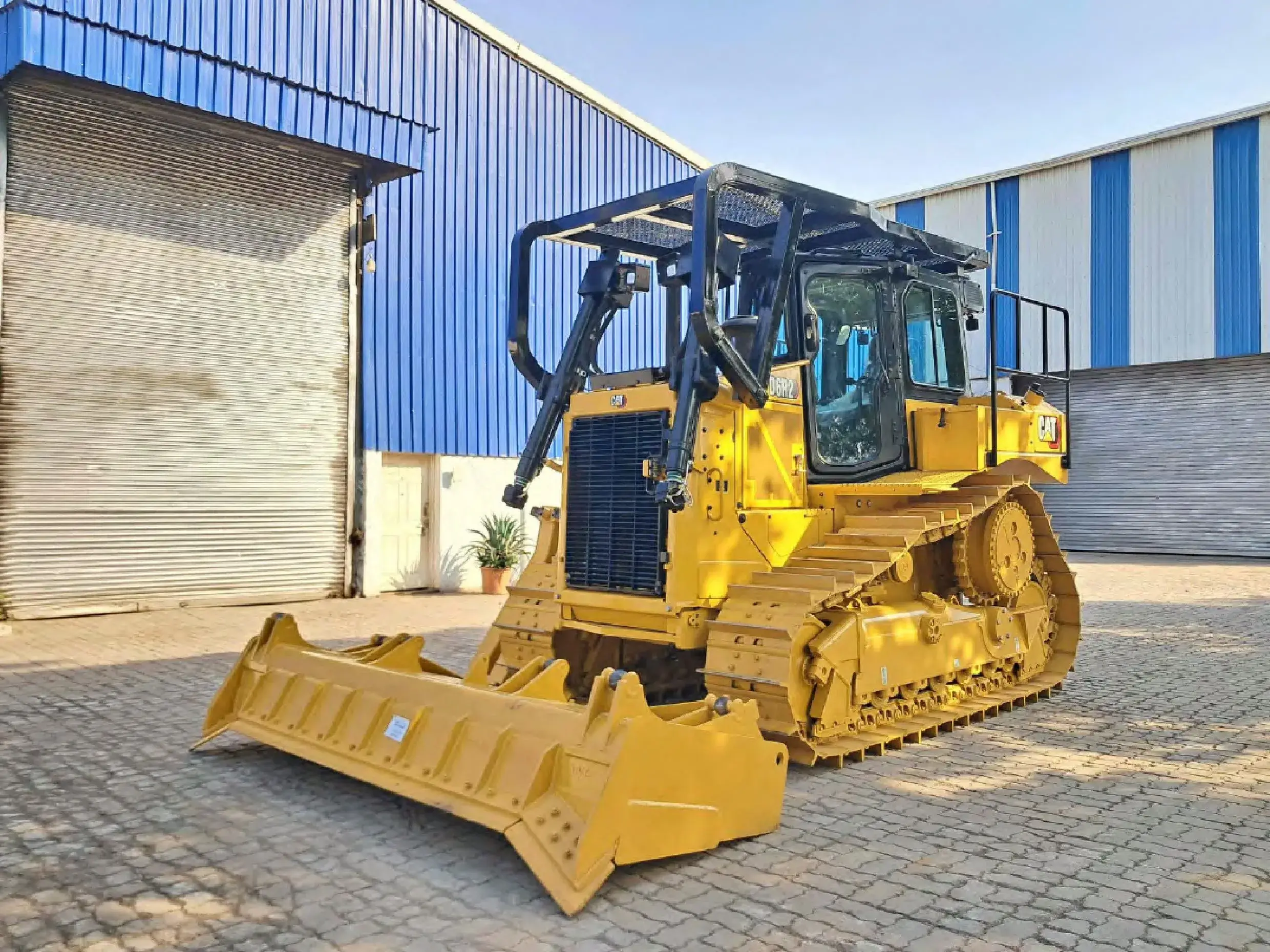
Bulldozer Uses: Top Applications in Mining, Roadwork, and Land Clearing
Bulldozers are the backbone of heavy earthmoving. Their weight, tracks and blade let them push, cut and grade material where wheeled machines struggle. Bulldozer uses span several applications, including mining, roadwork, land clearing and demolition.
In this blog, we cover the three applications where bulldozers do the most work: mining and quarrying, road work and development, and land clearing. For each one, we explain the tasks involved and the dozer classes and features that suit the job.
Most Common Bulldozer Uses
1. Mining & Quarrying
Mining bulldozers handle three jobs on a pit: stripping overburden, pushing broken rock to the crusher feed, and keeping haul roads level for loaded trucks. Ground pressure and blade class matter more here than anywhere else, since mining ground is uneven and abrasive.
The CAT D8 and D9 cover mid-size mining support work, while the D10 and D11 step in for high-volume overburden removal on bigger pits. Ripper attachments come standard on most mining configurations, since breaking up compacted rock before pushing it saves fuel and engine strain. Track shoe width and roller count also matter on mine-site duty, where abrasive ground wears the undercarriage quickly.
2. Road Work & Development
Road projects need grading precision more than raw pushing power. Mid-size construction bulldozers earn their reputation here. The CAT D5 and D6 dominate this segment because they balance blade control with enough weight to move subgrade material without overworking the undercarriage.
Typical tasks include clearing the right-of-way, cutting and filling to grade, spreading base course, and building embankments for culverts and bridges. A six-way blade helps since it angles and tilts for fine grading that a straight blade cannot match.
3. Land Clearing
Land clearing covers a wide range of bulldozer uses. It starts from removing vegetation from a real estate development to clearing debris after a flood or cyclone. LGP (low ground pressure) tracks matter a lot here, since cleared sites often have soft or uneven soil that a standard undercarriage would sink into.
The CAT D6R and D7 handle most clearing jobs well, especially when fitted with a root rake or brush blade instead of the standard straight blade. A root rake pulls stumps and roots out without dragging excess topsoil along with them, which saves regrading work later. If a project includes clearing and rough grading together, the D6 covers both without issue.
Key Bulldozer Features Across Applications
- Blade Type: A straight blade suits heavy pushing in mining, a six-way blade suits fine grading on roads, and a root rake or brush blade suits land clearing.
- Tracks: Track shoe width and roller count affect traction and wear on abrasive mining ground, while low ground pressure (LGP) tracks help on soft, cleared sites.
- Rippers: A ripper breaks up compacted rock before pushing, which saves fuel and reduces engine strain in mining and quarrying.
- Machine Class: Large dozers like the D10 and D11 suit high-volume overburden removal, while mid-size D5 and D6 machines suit road grading and land clearing.
Conclusion
A bulldozer performs best when its blade, machine class and tracks match the job. Mining calls for heavy-duty classes with rippers and wide track shoes, road work calls for mid-size machines with precise blade control, and land clearing calls for low ground pressure tracks and attachments like a root rake.
Related Articles:
Types of earthmoving equipment and what they are used for
Best machines for road construction projects
Small attachment upgrades that boost the performance of older dozers

