



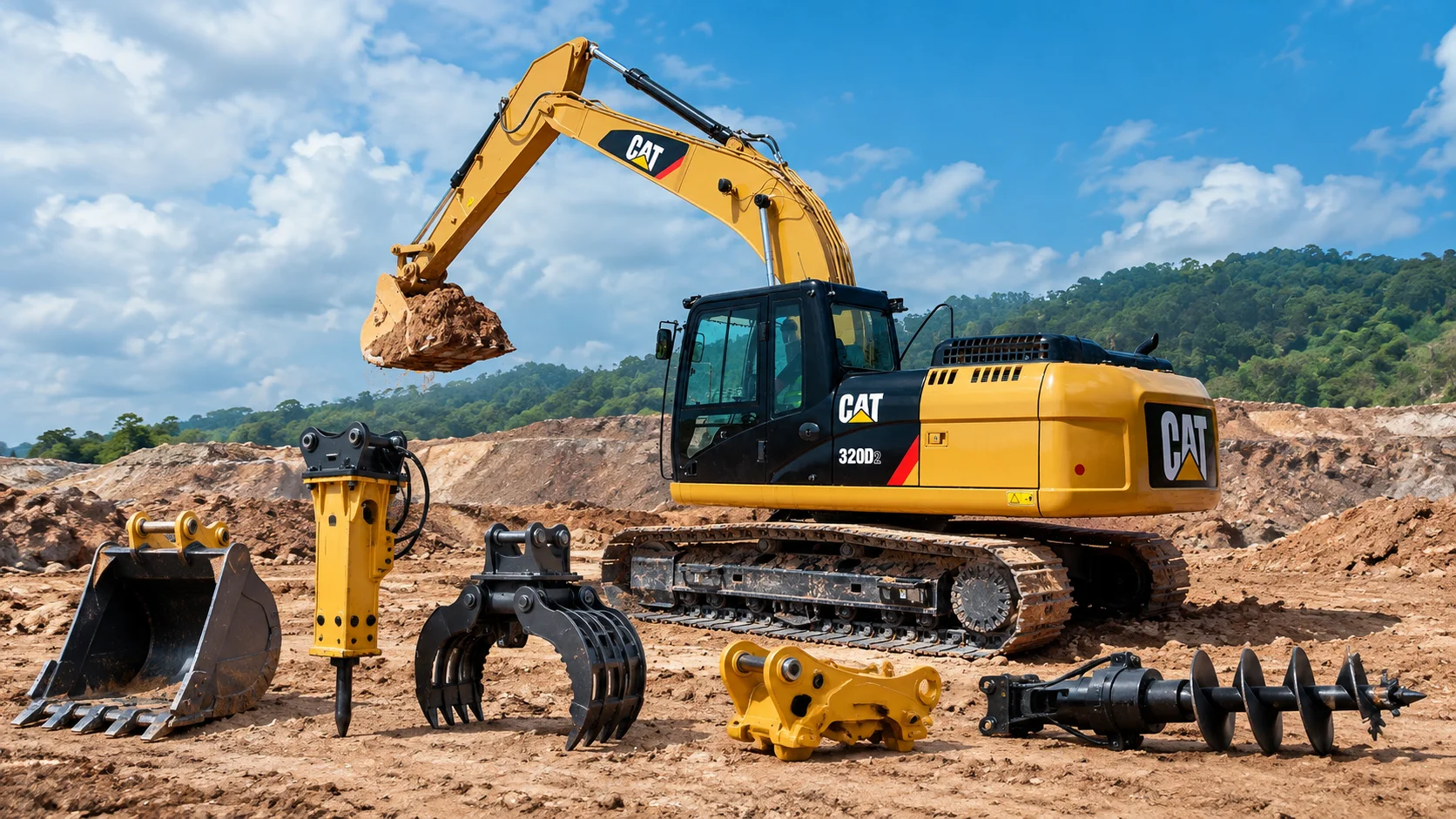
Excavator Attachments Explained: Which One is Right for Your Project?
An excavator is mainly designed for digging, but you can unlock its real value by fitting it with the right optional excavator attachments. An excavator usually comes with a standard bucket, but you can add optional tools to prepare it for a range of tasks, including breaking hard materials, grading, grabbing, etc. One machine can easily switch from trenching to demolishing within minutes, and this flexibility counts once you’re on jobs with mixed requirements.
However, selecting an excavator based just on availability and price can cause excessive wear, higher fuel consumption, hydraulic issues, and downtime. The best choice isn’t the most powerful tool available, but one that fits well with your requirements. Before selecting a tool, like larger excavator buckets or trenching buckets, ask two questions: What work must your excavator complete, and can the machine fulfil the power requirement?
This guide covers the most common attachments for excavators, their uses and how to select a tool for your job.
Most Popular Excavator Attachments Listed
1. Digging Buckets: General-purpose buckets for loose to medium soils and the default choice for everyday earthmoving.
Best For: Site clearing, loading trucks, backfilling.
Check: Use a heavy-duty or reinforced bucket in abrasive or rocky ground. A standard one wears faster there.
2. Hydraulic Breakers: A hydraulic hammer for excavators is built to break concrete, rocks, and hard materials where digging alone won’t be enough.
Best For: Demolition, reinforced concrete, quarry work, and very hard, unfractured rock.
Check: Match the breaker’s size and flow to the carrier. Hammering with an undersized machine stresses the boom and stick.
3. Augers: An excavator auger attachment is used to drill post holes for fences, foundation piers, and utility piles with more consistency and precision compared to manual boring.
Best For: Repetitive, evenly spaced holes.
Check: Choose the bit diameter and torque for your soil. Hard or stony ground needs higher torque and a rock-style bit.
4. Grapples & Thumbs: Both of these excavator attachments are used to grip logs, debris, and materials that are irregularly shaped. Their handling versatility makes them useful for clean-up and forestry applications.
Best For: Clean-up, land clearing, forestry, and demolition debris.
Check: Choose a thumb if you mostly dig and occasionally pick, and a grapple if handling is the main task.
5. Couplers: Often called quick couplers, this tool lets you replace attachments within minutes, being really useful in projects with time constraints.
Best For: Sites that need frequent attachment changes.
Check: Manual couplers suit occasional swaps. Hydraulic ones let the operator change tools from the cab, which is safer and faster. Confirm that the coupler fits your pin size and linkage.
6. Clamshell Buckets: These buckets have two hinged jaws that close around loose and wet materials. This mechanism makes them ideal for deep vertical digging and dredging, allowing operators to extract materials from confined spaces.
Best For: Deep vertical digging, shafts, dredging, and confined spaces.
Check: Clamshells are for vertical excavation and are not suited to hard, compacted ground. Make sure the machine can lift the bucket’s weight plus the load.
7. Orange Peel Grabs: Designed specifically for scraping yards and ease out complex picking and sorting jobs in waste management. Their multi-tine design can grab bulky, loose and scrap materials that are irregularly shaped for easier truck loading.
Best For: Scrapyards, waste handling, sorting, and loading trucks.
Check: Choose the tine count by material. Fewer tines suit bulky items, and more tines hold smaller, loose scrap.
8. Trenching Buckets: These reinforced and narrow buckets are especially designed for digging utility lines and drainage runs. They are very useful where width and depth precision are essential.
Best For: Cable, pipe, and drain trenches where width and depth precision matter.
Check: Select the width from the pipe or cable size plus working clearance. A trench wider than needed means more digging and backfilling.
9. Rippers: This excavator attachment is built to penetrate frozen ground, hard surfaces or compacted soil. Rippers use an excavator’s high breakout force and transfer it to a single point to tear through hard surfaces before digging begins.
Best For: Weathered, layered, or fractured rock, compacted soil, and frozen ground.
Check: A ripper suits rock with natural fractures. For very hard rock or reinforced concrete, a breaker is usually the better tool.
10. Tiltrotator: A flexible joint that allows tools to rotate 360° and tilt them sideways. This mechanism improves precision of grading and eliminates the need to repeatedly reposition machinery.
Best For: Finish grading, slope work, and tight sites.
Check: Tiltrotators cost far more than standard couplers. If you only need to angle a bucket for grading, a simpler tilting coupler may be enough.
How To Match Excavator Attachments To Your Job?
1. Check Hydraulic Flow: Compare the gallons per minute requirement of a tool with your excavator’s auxiliary hydraulic output to prevent sluggish performance or blown seals.
2. Verify the Circuit Type: Confirm whether the attachment needs a one-way or two-way flow, and whether it needs a return line or case drain. Check the excavator’s circuit against these needs.
3. Verify the Operating Weight: Check if the combined weight of the attachment and the load doesn’t exceed your equipment’s safe lifting capacity to avoid tipping.
4. Check Breakout Forces: Match the attachment’s structural integrity to the excavator’s breakout forces to prevent cracked welds and bent pins while performing heavy earthmoving tasks.
5. Confirm Mounting Specs: Verify the diameter of the pin, pin spacing, and width of the stick to ensure a secure fit before using the equipment on site.
6. Get Manufacturer Approval: Confirm the attachment is approved for your excavator model. Also check that your operators are trained on the attachment and that local safety requirements are met
Assessing TCO & Site Conditions
Assessing your total cost of ownership goes beyond the initial purchase price, and you must check the local site conditions to avoid premature machine failure. Abrasive sandy conditions need tools designed with high-wear steel for an extended lifespan and reduced maintenance costs. Quarries need heavy-duty reinforced tools to prevent mid-shift breakdowns.
Spending slightly more money on durable excavator attachments can significantly reduce long-term operating costs, reduce breakdowns, and keep your project timelines on track.
Conclusion
Picking the right attachment is a decision that can increase profitability. Match the weight of the carrier, the output of hydraulics, and the conditions of the sites before you commit to purchasing a model. When done correctly, your fleet will finish more work in less time.
To ensure your trenching buckets and other attachments perform well, you first need a reliable excavator, whether new or used. New excavators are costly, and not all buyers can afford them, especially when you’re considering combining them with optional attachments.
JKIPL is India’s leading seller of used excavators. We offer reliable and durable CAT excavators, which are famous globally for their high performance and durability. Visit JKIPL to explore used excavators and contact us for more information.

