



Top 10 Uses Of Excavators Across Various Industries
Most people think of a construction site when they think of excavators. However, in reality, the uses of excavators extend far beyond digging on construction sites. Whether they involve complex tasks like underwater dredging or trenching, excavators play a key role in many important industries that keep economies running.
If you’re a contractor or a procurement manager buying equipment for your projects, understanding how an excavator in construction, mining, agriculture, and public works performs and which excavator attachments increase the versatility of your machine will enable you to make smarter buying decisions.
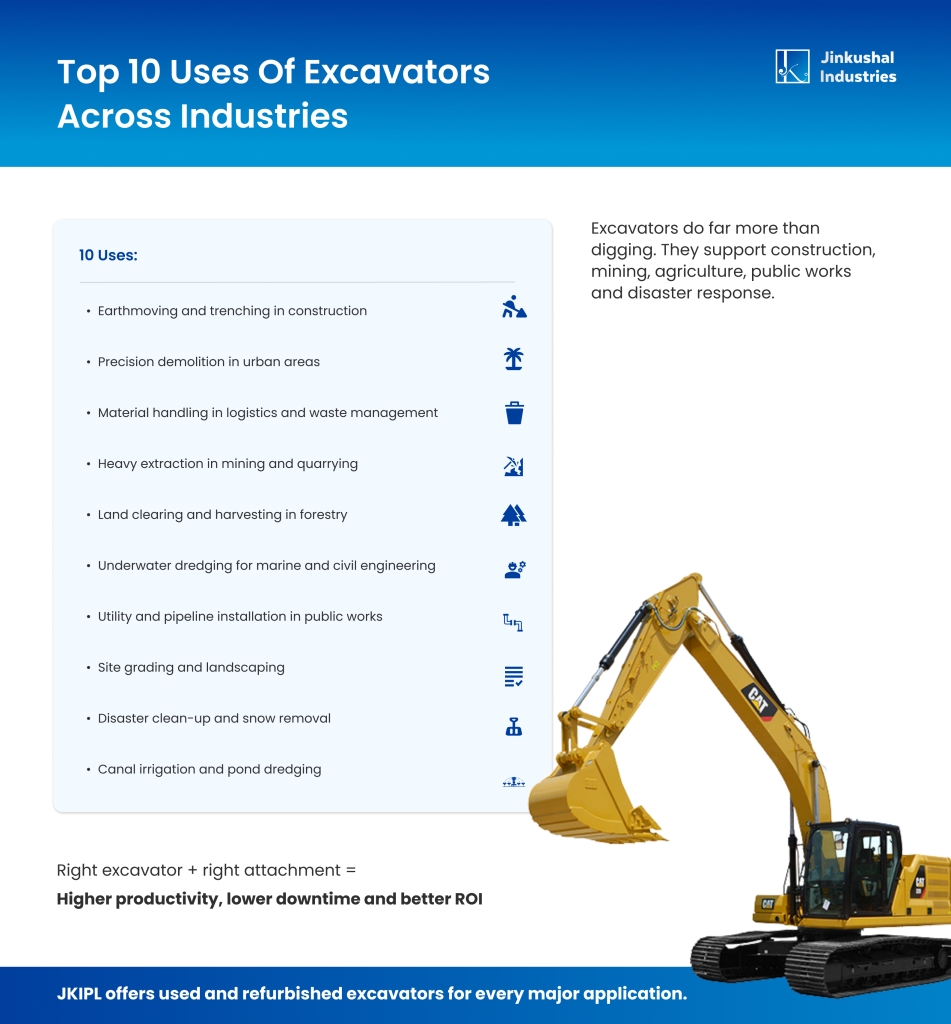
Here is a guide exploring the 10 key uses of excavators in the most common industries.
10 Common Uses Of Excavators In Key Industries
1. Earthmoving & Trenching In Construction
The most common role of an excavator in construction is moving large quantities of earth from one place to another quickly and precisely. This machine is very useful in digging foundations, cutting trenches for creating drainage systems or levelling a site before work begins.
A standard digging bucket, combined with sharp teeth, helps with easier digging even on hard and compacted surfaces.
Tracked excavators can easily work on unstable surfaces, which makes them the ideal equipment for working on large civil projects where the ground is unstable.
- Ideal Machine: 14-22 ton tracked excavators for heavy earthmoving and trenching, and general site preparation. Mini excavators are better for urban areas with space limitations.
- Why Makes Them Ideal: 14-22 ton excavators offer sufficient breakout forces for compacted soil and high stability to work in trenching.
- Recommended Attachments: Standard digging bucket, trenching bucket, and ripper for hard surfaces.
- Watch Out For: Soil and wet ground, and uneven surfaces
- Buyer’s Check: Check the dig depth, bucket width and transport width before mobilisation.
2. Precision Demolition In Urban Development
Excavators have impressive breakout forces and can push through hard structures with ease. Thanks to their powerful engines and hydraulics. These machines can tear down structures in urban areas where control is also important, besides raw power.
Excavator attachments like hydraulic breakers and hammers allow operators to dismantle buildings floor by floor, reducing the chances of vibrations and debris spread. Their high precision is very important in urban areas where adjacent structures and underground utilities are at high risk.
- Ideal Machine: 20-30 ton machine for precise demolition and high reach unit for tall structures
- Why Makes Them Ideal: Urban demolition needs reach, stability, and high breakout force; a good machine helps your crew work safely.
- Recommended Attachments: Breakers for concrete, pulveriser for crushing and demolition shear for steel structures.
- Watch Out For: Dust, vibration, falling debris and safety risks.
- Buyer’s Check: Check auxiliary hydraulics, operator visibility and counterweight balance.
3. Material Handling In Logistics & Waste Management
Logistics and waste management sectors also highly benefit from excavators. This machine is highly capable of sorting and shifting bulk materials like scrap metal, construction debris, and large quantities of municipal waste using a grapple attachment.
Additionally, larger excavator buckets and grapples allow operators to pick, rotate and place materials with precision in both sectors. Waste management areas and recycling sectors use this machine daily to perform complex sorting operations.
- Ideal Machine: 20-30 ton machines for yards and transfer stations
- Why Makes Them Ideal: Fast cycle times are essential in material handling tasks, so you need faster swing speed, strong hydraulic systems and enhanced visibility to keep loading operations efficient.
- Recommended Attachments: Rotating grapples, sorting grapples and thumbs for irregularly-shaped waste and scrap.
- Watch Out For: Avoid repetitive loading and abrasive waste to reduce wear in pins, bushings, and bucket edges.
- Buyer’s Check: Check hydraulic flow for continuous grapple use and demand for reinforced linkages and wear parts.
4. Heavy Extraction In Mining & Quarrying
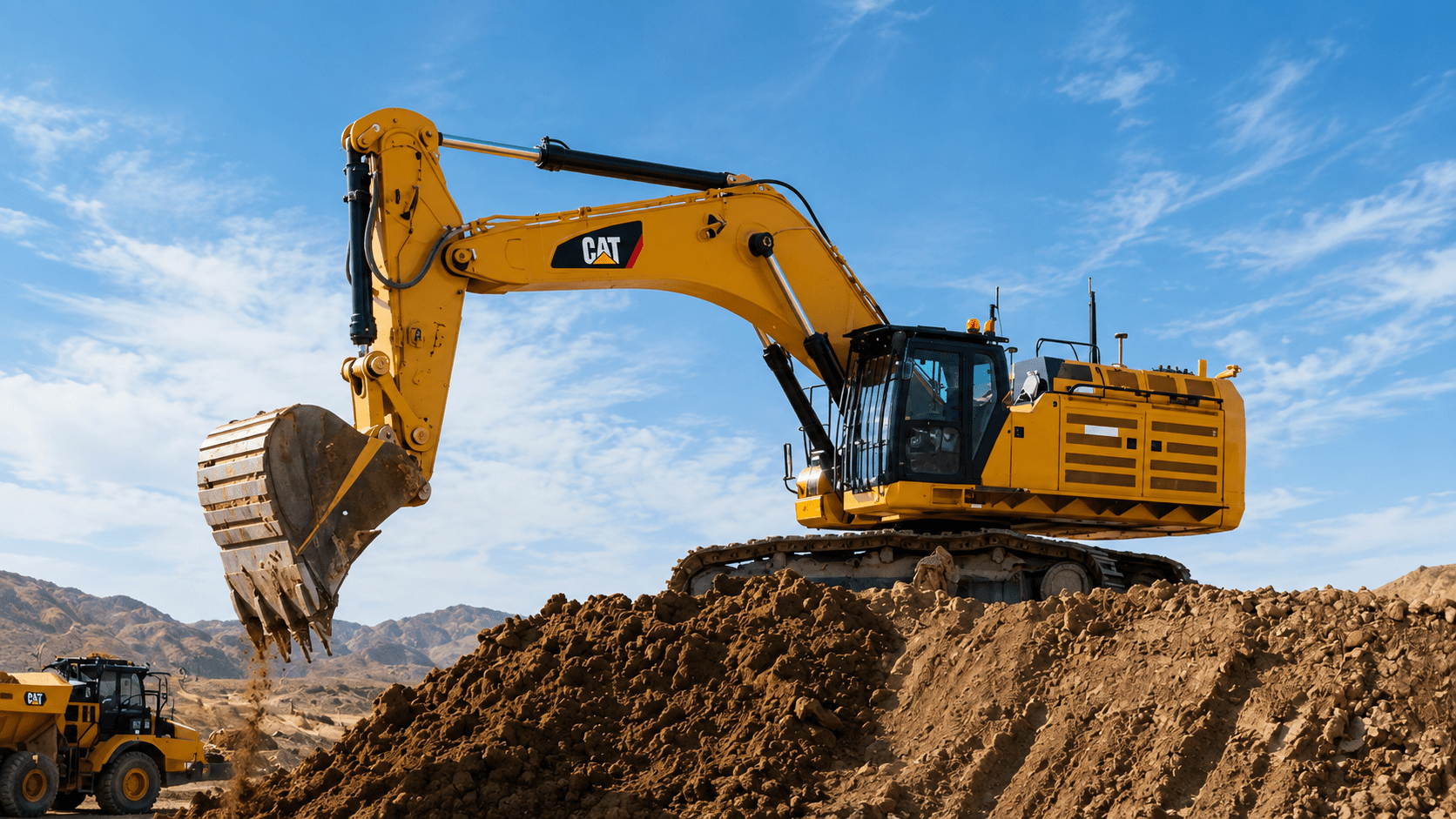
Mining excavators are some of the most durable machines because they are designed to work in some of the harshest environments on earth. In open-pit mines and quarries, heavy-duty excavators fitted with attachments like rock buckets and rippers break through hard rock and ore layers where standard buckets would struggle.
CAT mining excavators, for example, are designed with reinforced boom structures and performance-oriented hydraulic systems designed for challenging tasks during extraction work.
- Ideal Machine: 30+ tons excavators for quarrying and mine loading
- Why Makes Them Ideal: Mining and quarrying need machines with high breakout forces, which can perform long-duty tasks and a machine that can handle abrasive materials without overheating.
- Recommended Attachments: Rock bucket and ripper tooth for hard ground, plus hammers for secondary breaking.
- Watch Out For: Heat, dust and constant machine stress that can increase machine wear, so pick machines with robust cooling systems and easy maintenance.
- Buyer’s Check: Look for models offering reinforced boom and undercarriage, accessible daily inspection points and easy service access.
5. Land Clearing & Harvesting In Forestry
Clearing dense vegetation for road construction or firebreaks requires more than just raw. They require precision and the right cutting tool. Excavator attachments like mulchers and hydraulic thumbs enable operators in excavators to clear vegetation, fell, strip and stack trees.
A single machine with a specialised attachment reduces the need for multiple machines at sites and helps in meeting tight project timelines in remote locations where machine mobilisation is costly.
- Ideal Machine: 14-30 ton tracked excavator, depending on the density of vegetation, tree size and access to terrain.
- Why Makes Them Ideal: Forestry work requires reach, stability, and sufficient breakout force to handle roots, brush and uneven surfaces without needing to constantly reposition.
- Recommended Attachments: Mulcher for dense brush, felling shear for tree removal, and thumbs for stacking and moving timber.
- Watch Out For: Flying debris, dust and heat buildup, and rough terrain, all of which can increase wear.
- Buyer’s Check: Buy models with high-flow hydraulics, cab guards, and undercarriage protection.
6. Underwater Dredging For Marine & Civil Engineering Tasks
Maintaining navigable waterways requires regular sediment removal from riverbeds. Long-reach excavators make it possible for operators to work in riverbeds, harbours and coastal areas without dry land access.
Long-reach excavators are often mounted on floating barges and are equipped with dredging buckets to scoop out accumulated silt, sand, and debris to maintain waterways, prevent flooding and prepare for marine foundations. Civil engineering fleets restoring infrastructure damaged from floods also rely extensively on this capability, where other heavy machinery can’t operate.
- Ideal Machine: Long-reach excavators for bankside and shallow-water dredging
- Why Makes Them Ideal: Dredging requires reach, so the machine must be capable of working from a stable bank or platform while still being able to reach below the waterline.
- Recommended Attachments: Dredging bucket and clamshell for removing silt, sand, and debris.
- Watch Out For: Soft ground, corrosion, and unstable access conditions that can slow the job.
- Buyer’s Check: Check boom reach, corrosion protection and whether a barge system is needed.
7. Utility & Pipeline Installation In Public Works
Digging precise trenches is one of the most complex jobs in the public works distribution sector. Mini excavators with narrow buckets can create clean and consistent cuts to create trenches for laying gas lines, water pipes, electricity, and fibre optic cables on busy roads.
Hydraulic thumbs also enable your crew to pick and place heavy pipes into trenches without causing ground disruption.
- Ideal Machine: Mini excavators are the best for utility and pipeline installations in urban areas. 14-22 ton machines for deeper trenching and larger pipe laying jobs.
- Why Makes Them Ideal: Utility installations need precise trenching capabilities, careful spoil placement, and compact access in urban sites.
- Recommended Attachments: Narrow trenching bucket, thumbs, and quick coupler for fast attachment changes.
- Watch Out For: Hidden utilities pose a major risk, so locating lines, trench control, and spoil management tasks must be carefully handled.
- Buyer’s Check: Evaluate machine width, turning radius, and bucket size against required bedding and trenching needs.
8. Site Grading & Landscaping In Residential & Commercial Sectors
Before final paving or turf installation, surfaces in residential and commercial properties need detailed grading. An excavator fitted with a tilting grading bucket or tiltrotators provides operators the flexibility to shape slopes, recontour land and prepare sub-base for planting and paving.
Landscaping contractors working on large commercial projects use mid-size excavators to move topsoil and reshape terrains, eliminating the need for specialised levelling machines.
- Ideal Machine: 5-14 ton excavator for finish grading, grading slopes, and landscaping
- Why Makes Them Ideal: This class of excavators provides enough power to move materials and enables better control for finishing works, drainage shaping and sub-base preparation.
- Recommended Attachments: Grading bucket or tilt rotator for slope cleaning
- Watch Out For: Buy the right attachments to avoid undercutting and uneven finishing.
- Buyer’s Check: Verify slope accuracy and confirm quick-couple compatibility.
9. Disaster Clean-Up & Snow Removal
Municipalities extensively rely on the rapid deployment of excavators after floods, earthquakes and heavy snowfall. Excavators fitted with hydraulic grapples and snow buckets are highly useful for clearing debris from roads, collapsed structures and clearing drainage channels.
Mini excavators can access narrow roads and unstable terrain that large machines cannot.
The uses of excavators in disaster response are more than just clean-up; they also enable rescue teams to reach affected zones quickly.
- Ideal Machine: 14-30 ton excavators for clearing debris; mini excavators are more suitable for narrow streets and restricted areas access zones.
- Why Makes Them Ideal: Disaster response tasks need fast attachment changes, strong reach and high stability to move debris.
- Recommended Attachments: Grapple, snow bucket, or magnet, depending on whether the task is removing debris, clearing snow and recovering metal.
- Watch Out For: Low visibility, unstable piles and night operations
- Buyer’s Check: Look for models offering quick couplers, lighting, and cab protection.
10. Canal Irrigation & Pond Dredging
Farmers and agricultural landowners use excavators to dig and restore irrigation canals, deepen ponds and manage water distribution bodies in large farmlands. Long-reach excavators with dredging buckets can easily handle complex tasks like sediment removals in canals that silted up over the years.
Maintaining these water channels can improve crop yield, and an excavator can perform irrigation work that would take much longer with manual labour.
- Ideal Machine: 20-40 ton long-reach excavators for canal work and pond restoration
- Why Makes Them Ideal: Agricultural dredging needs to keep the water moving, silt removal, and shaping banks without collapsing the channel edges.
- Recommended Attachments: Dredging bucket, clamshell, or tilt bucket for sediment removal or bank profiling.
- Watch Out For: Wet spoil and soft banks reduce productivity if disposal is unplanned.
- Buyer’s Check: Evaluate reach, spoil disposal logistics and corrosion protection before starting a job.
Conclusion
Excavators are among the most versatile and profitable machines for any heavy equipment fleet. If your team is working in mines, laying pipelines or restoring flood-damaged land, the right excavator paired with the right excavator attachments determines how quickly and cost-effectively you can get a job done.
JKIPL is India’s leading used equipment seller. We offer refurbished and used excavators from the leading manufacturers. Whether you want a heavy-duty excavator or large CAT mining excavators, we provide various options at affordable prices. Contact us today for more information.

